Lumi Kids
Best Age to Learn a Second Language: A Guide for Parents
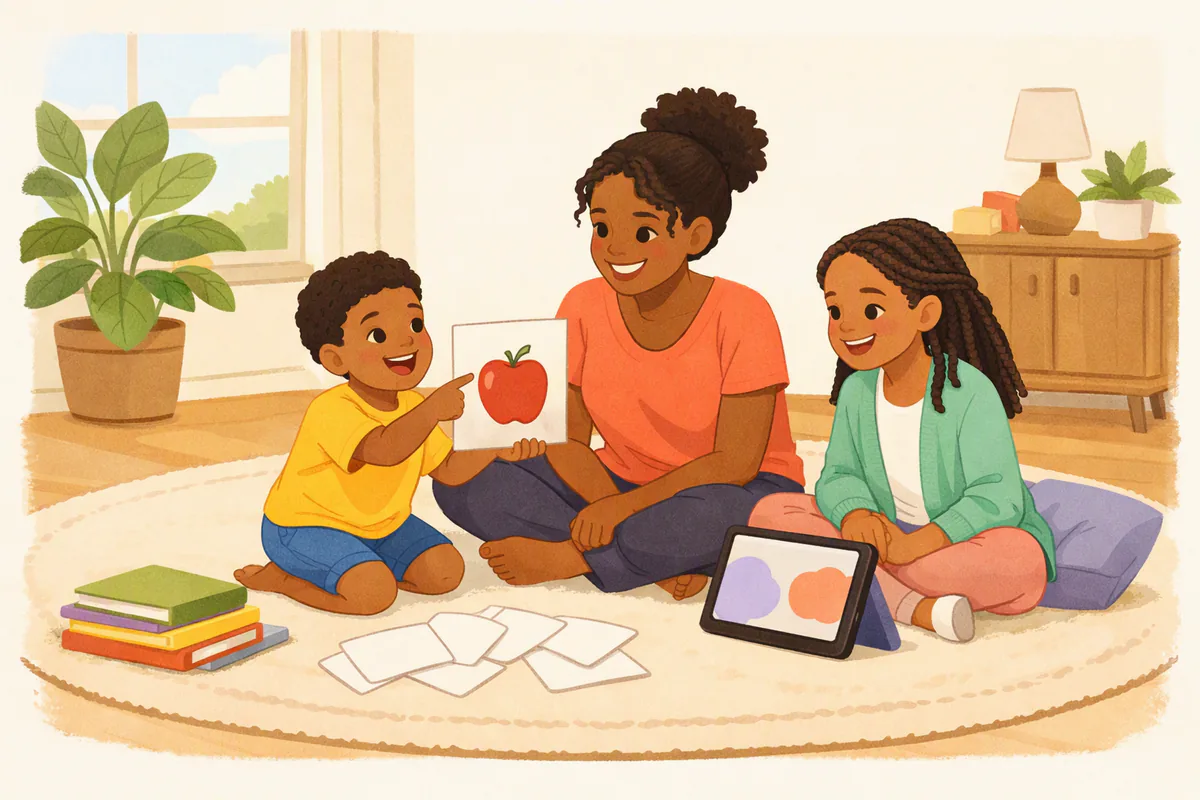
There is no single best age to learn a second language. Younger children copy new sounds more easily and are less shy about trying, while older children learn words and grammar faster. Research suggests that starting before about age 10 gives the best chance of native-like grammar, but children who start at 8 or 9 still learn very well. What matters most is regular contact with the language, at any age.
If you are reading this because your child is 4 and you wonder whether it is too early, or because your child is 9 and you worry you missed the window, the honest answer is the same: you can start now. This guide explains what the research does and doesn't say, what is realistic at each age from 4 to 9, how much time helps, and what US and UK schools offer at each stage.
Is there really a "best age" to learn a second language?
Not in the way the question is usually asked. Different parts of a language get easier or harder at different ages, so "best" depends on what you hope for.
Younger children have a real advantage with sound. They imitate accents and unfamiliar sounds without thinking about it, and they rarely feel embarrassed to try. Older children have an advantage with speed and structure. A 9-year-old can read, notice patterns ("these words all end in -o"), focus for longer and remember strategies, so the same 100 words go in faster than they do for a 4-year-old.
| Starting at 4–5 | Starting at 8–9 | |
|---|---|---|
| Pronunciation | Copies sounds easily | Improves with practice and listening |
| Speed of learning words | Slower, through play and repetition | Faster, can use reading and lists |
| Confidence to speak | Usually high | Often needs encouragement |
| Focus per session | A few minutes per activity | 15–20 minutes is realistic |
So an early start is a gift, not a requirement, and a later start is a different route, not a lost cause. Both routes need the same thing: contact with the language that keeps happening for months and years.
What does the research actually say about age?
The most cited recent study comes from MIT. In 2018, cognitive scientists Joshua Hartshorne, Josh Tenenbaum and Steven Pinker analyzed an online English grammar quiz taken by nearly 670,000 people and published the results in the journal Cognition. Their models suggested that the ability to learn grammar stays strong until about age 17 or 18 and then declines, and that people who want native-like grammar should start by about age 10 (MIT News, May 2018).
Three things are worth knowing before you read too much into it:
- The study looked at grammar (in English as a second language), not accent, vocabulary or the ability to hold a conversation.
- "Native-like" is a very high bar. Most families want a child who can understand, speak with confidence and keep learning, which is reachable from any start age in childhood.
- The researchers themselves said they could not tell whether the decline comes from biology or from life changes around 17–18, such as leaving home or starting work.
In short, the research supports starting in childhood, and every age from 4 to 9 sits comfortably inside the strong-learning years.
What can a child realistically do at each age?
The table below describes typical behavior, not targets. Children vary a lot, and the amount of exposure matters more than the birthday.
| Age | How they learn best | What progress looks like | What to avoid |
|---|---|---|---|
| 4–5 | Songs, routines, pointing games, short back-and-forth play | Understands simple instructions, says single words and set phrases ("hola", "gracias") | Reading tasks, long sessions, being asked to "perform" |
| 6–7 | Games with rules, picture books, short dialogues | Answers simple questions, builds 2–4-word phrases, starts to recognize written words | Lists to memorize without context, correcting every error |
| 8–9 | Stories, conversations about their interests, reading along | Uses full short sentences, asks questions, reads simple texts in Latin-script languages | Toddler-style content (they notice and lose interest) |
If your child is younger than 4, the goal is simply familiarity: the same few songs, words woven into daily routines, and no pressure to answer.
Is it too late to start at 8 or 9?
No. Children of 8 and 9 are still years inside the strong period described above, and they bring tools that preschoolers don't have. They can read, so they can see a word and hear it at the same time. They can follow a story across days. They can tell you which games they like, which makes practice easier to keep going.
The main difference is emotional. Around this age many children become aware of mistakes and of being watched. You can work with that:
- Let them practice in private first (with you, with a recording, with an app) before speaking in front of others.
- Praise attempts, not perfection: "You tried a whole sentence!" beats "Almost, but it's la not el."
- Connect the language to something they already love, such as soccer, animals, cooking, a game or a show.
A 9-year-old who practices a little most days can overtake a 5-year-old who practices once a week. How often counts as much as when.
Will a second language confuse my child or delay speech?
This is one of the most common worries, and the evidence is reassuring. ASHA, the American Speech-Language-Hearing Association, says on its family website that using multiple languages does not confuse children or cause speech or language delays. It also notes that children sometimes blend words or grammar from their languages, and that this is an expected part of learning more than one language (ASHA / Communication Health Support Association).
Two practical points follow from that:
- Mixing is normal. A child who says "I want more leche" is using everything they have. Repeat the sentence back naturally in one language and move on.
- Real speech problems show up in every language. If your child has a communication difficulty, it will appear in all the languages they use, so dropping the second language does not fix it. If you are worried, talk to a speech-language pathologist instead of stopping.
How much time does a young child need each week?
There is no official minimum, and you should be wary of anyone who promises fluency in a set number of hours. What we can say is how families make it work: small, frequent doses that fit into the day.
| Age | A workable daily rhythm | Example |
|---|---|---|
| 4–5 | 5–10 minutes in 2–3 moments | A song at breakfast, a color game while dressing, one picture book at bedtime |
| 6–7 | 10–15 minutes | A 5-minute game, a short show in the language, 2 minutes of "ask me in Spanish" |
| 8–9 | 15–20 minutes | A story or lesson, then a short conversation about something they care about |
If part of that time is on a screen, keep it within healthy limits. For children aged 3–4, the World Health Organization advises no more than one hour of sedentary screen time a day, and says less is better (WHO, April 2019). A few minutes of an interactive language app fits easily inside that; a long passive video session does not.
Where Lumi Kids fits. Lumi Kids is an iPhone and iPad app for ages 4–9 in which Lumi, an AI owl, explains in English while your child practices Spanish, French, Mandarin or one of seven other languages, in short worlds of at least six exercises each, including talking with Lumi out loud. The first two levels and 60 seconds of live talk are free; Lumi Plus ($14.99 a month or $119.99 a year on the US App Store, checked October 5, 2026) unlocks the last two levels and 10 minutes of live talk a week. In the parent zone you set a daily live-talk limit between 5 and 60 minutes and see a weekly report. See how the app works.
What do schools offer at each age?
In the US, most children meet a second language at school much later than parents expect. In a January 2024 survey of public schools by the National Center for Education Statistics, 43% of schools offered world-language classes, but only 20% of elementary schools did, compared with 82% of high schools. In elementary schools, Spanish was taught in 16% of schools, and French and Chinese in 1% each. Two-way immersion programs were offered by 9% of elementary schools and one-way immersion by 7% (ACTFL report on NCES data, March 2026).
| Where | Ages 4–6 | Ages 7–9 |
|---|---|---|
| US public schools | Rare: some immersion or dual language programs, a few FLES classes | Still optional; where taught, third graders in public schools averaged about 120 minutes a week (NTPS 2017–18) |
| England | Not required in Reception or key stage 1 | A foreign language is a national curriculum subject at key stage 2 (ages 7–11); French is the most taught |
For England, the national curriculum lists languages as a subject from key stage 2, ages 7 to 11 (GOV.UK). Our guide to languages at school explains the US program types and the UK system in more detail, and the article on dual language immersion covers what to ask before you enroll.
The takeaway: for most children aged 4–9, especially in the US, the first steady contact with a second language will come from home, a class you choose or an immersion program you seek out.
How to start this week, whatever your child's age
You don't need a curriculum to begin. These five steps work at 4 and at 9; only the length changes.
- Pick one language your family can keep up for at least a year. If you are unsure, our languages for kids page compares the ten the app teaches.
- Choose 5 words your child uses every day: a color, a number, a greeting, a food, a family word. Our Spanish words for kids pages have audio and simple say-it guides.
- Attach them to routines. Count stairs, name the color of the cereal bowl, say buenos días at breakfast.
- Add one source of real speech: a song your child loves, a relative who speaks the language, a class, or an app that asks your child to answer out loud.
- Ask for a word, not a performance. "How do you say apple in Spanish?" is a game. "Say something in Spanish for Grandma" is pressure.
If you don't speak the language yourself, our step-by-step guide on how to teach your child Spanish at home, even if you don't speak it shows a full daily plan. Families with a second language already at home can read how to raise a bilingual child.
The bottom line
The best age to learn a second language is the age your child is now, as long as the language shows up often. Young children bring ears and courage; older children bring speed and strategies. Start small, keep going, and let your child speak, even one word at a time.
Frequently asked questions
What is the best age for a child to learn a second language?
There is no single best age. Children who start young (before school age) tend to copy new sounds and accents more easily and feel less shy about speaking, while children who start at 7–9 learn words and sentence patterns faster because they can read, focus longer and use learning strategies. If you want a practical answer: start when you can offer a few minutes of contact most days, and keep it going for years.
Is it too late for my 8- or 9-year-old to learn a second language?
No. An 8- or 9-year-old is still years inside the period in which grammar learning is strong; in a large MIT study that ability stayed high until about 17 or 18. Older children usually make faster early progress than preschoolers. What they need more of is encouragement to speak, because many start to worry about making mistakes around this age.
Does learning two languages cause speech delay?
No. ASHA, the association of US speech-language pathologists, states that using multiple languages does not confuse children or cause speech or language delays. If a child has a real communication difficulty, it shows up in all of their languages, so dropping one language does not fix it. If you are worried about your child's speech, talk to a speech-language pathologist.
Can a 4-year-old learn two languages at the same time?
Yes. Many children around the world grow up with two or more languages from birth. At 4, learning happens through play, songs, routines and short conversations rather than lessons. Expect your child to understand far more than they say at first, and to mix words from both languages for a while.
How many minutes a day should a young child practice a new language?
No official number exists; ASHA's advice to families is to create daily chances to use the language. A workable rhythm is about 5–10 minutes a day at 4–5, 10–15 minutes at 6–7 and 15–20 minutes at 8–9, split into small moments. For 3- and 4-year-olds, the World Health Organization advises no more than one hour of sedentary screen time a day, so keep any app time well inside that.
Should my child read well in English before starting another language?
No. Speaking and listening do not depend on reading, and pre-readers can learn a lot by ear. Reading in the second language usually comes later; with Spanish, which is spelled very regularly, many children start decoding simple words soon after they read in English.
Will my child forget the language if we take a break?
Young children can lose active use of a language quickly if they stop hearing and speaking it, but words come back faster the second time. If you need a break, keep a small thread going, such as one song or a short weekly call with a relative, rather than stopping completely.
Is it better to start with a class, an app or at home?
Most families combine them. Home routines give daily contact, a class or tutor gives a real person to talk to, and a well-made app can add speaking practice on the days nothing else happens. For a 4- to 6-year-old, home and play come first; structure becomes more useful from about 6–7.
In the Lumi Kids app, Lumi the AI owl talks with your child, corrects gently and hands out stars. Ages 4–9, no ads. The first two levels and the first minute of live conversation are free.
Download on the App Store
The team behind Lumi Kids. Articles are written using published research on early-childhood language acquisition and the curriculum built into the app, and are reviewed and updated over time. Questions or corrections: hello@lumikids.live