Lumi Kids
Days of the Week in Spanish for Kids (With Audio)
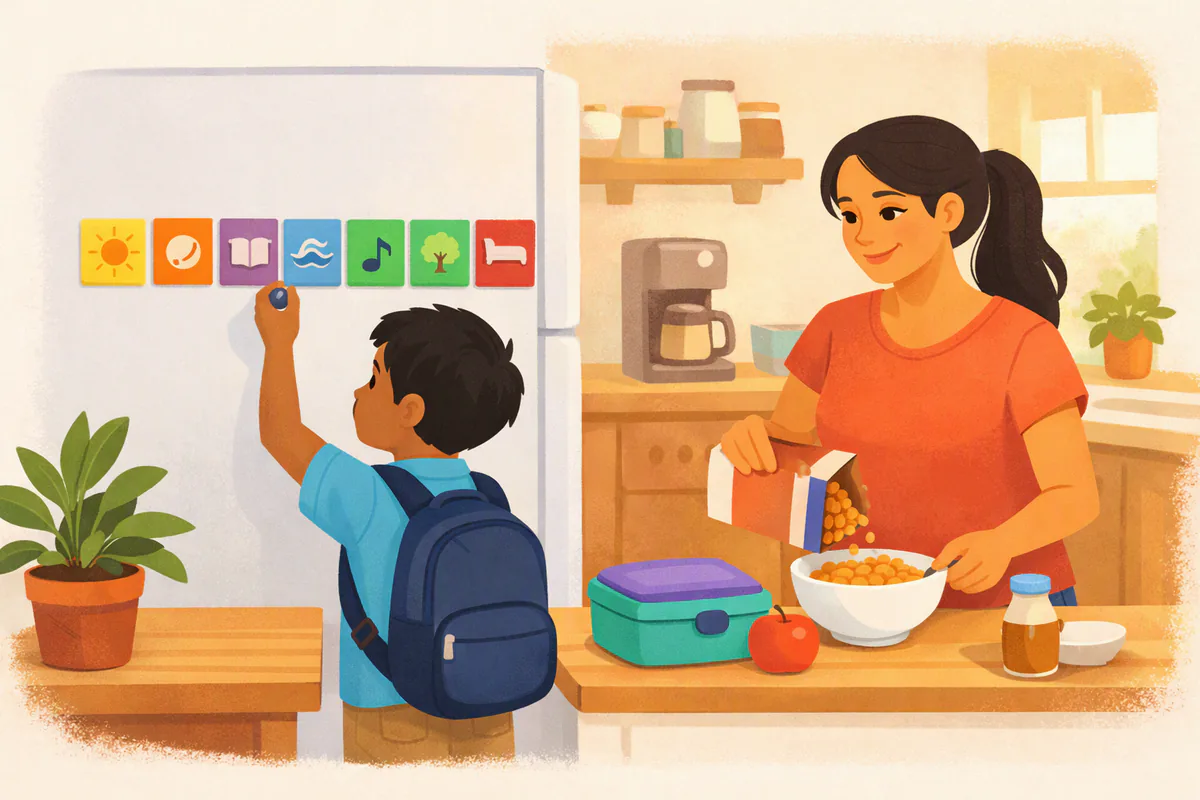
The days of the week are a perfect daily habit: there is a new one every morning, so your child gets a short, natural review without you planning anything. Here are the seven days in Spanish with their English meanings, a "say it" guide for English speakers and Lumi's audio, plus a song idea, the three phrases you need and a breakfast routine.
The days of the week in Spanish, with audio
| Spanish | English | Say it | Listen |
|---|---|---|---|
| lunes | Monday | LOO-nehs | |
| martes | Tuesday | MAR-tehs | |
| miércoles | Wednesday | MYEHR-koh-lehs | |
| jueves | Thursday | HWEH-behs | |
| viernes | Friday | BYEHR-nehs | |
| sábado | Saturday | SAH-bah-doh | |
| domingo | Sunday | doh-MEEN-goh |
Spanish writes the days with a small letter. Calendars in Spanish usually start the week on lunes. Voices: Lumi (AI-generated voice).
Watch three sounds: j in jueves is a breathy h (HWEH-behs), v in viernes and jueves is close to a soft b, and the accent in miércoles and sábado shows the stressed syllable.
Why lunes? Where the names come from
Five Spanish days are named after the moon and planets, which makes them easier to remember for curious kids:
| Day | Named after | English |
|---|---|---|
| lunes | la luna, the moon | Monday ("moon day") |
| martes | Mars | Tuesday |
| miércoles | Mercury | Wednesday |
| jueves | Jupiter | Thursday |
| viernes | Venus | Friday |
Sábado comes from the word "Sabbath" and domingo means "the Lord's day". Notice that English kept the moon in Monday too.
Three phrases for every morning
- ¿Qué día es hoy? (keh DEE-ah ehs OY): "What day is it today?"
- Hoy es martes. (OY ehs MAR-tehs): "Today is Tuesday."
- Mañana es miércoles. (mah-NYAH-nah ehs MYEHR-koh-lehs): "Tomorrow is Wednesday."
Add ayer (ah-YEHR, "yesterday") once the first two feel easy, and el fin de semana (ehl FEEN deh seh-MAH-nah) for "the weekend", which most kids want to talk about anyway.
A song idea and a breakfast routine
Song. Sing lunes, martes, miércoles, jueves, viernes, sábado, domingo to a tune your child already knows. "Clementine" fits the seven days with a little stretching, and so does clapping once per day with a big shout on domingo.
Breakfast routine (2 minutes).
- Ask ¿Qué día es hoy? while your child eats.
- Your child answers Hoy es…; help with the first syllable if needed.
- Name one thing that happens that day: Hoy es viernes: ¡pizza!
A picture chart on the fridge with one drawing per day (swimming, a library book, grandma's visit) gives your child something to point at. Soon your child may start saying the day before you ask.
For more ideas on short daily practice when you do not speak Spanish yourself, read our guide to teaching your child Spanish at home.
Free days of the week in Spanish worksheet (PDF)
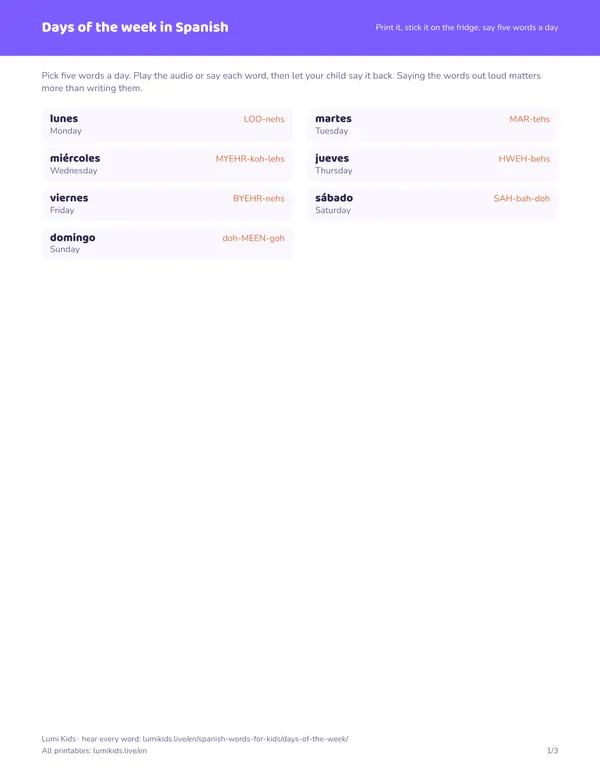
Three pages: the seven days with a say-it guide, a matching worksheet (Spanish to English) and a writing sheet. Free to print at home or in class.
Download the PDF: Days of the week in SpanishMore Spanish words for kids
- Months of the year in Spanish: the next step after the days.
- Numbers in Spanish: dates need them.
- Spanish greetings: start the day with buenos días.
- All Spanish words for kids.
Frequently asked questions
What are the days of the week in Spanish?
Monday lunes (LOO-nehs), Tuesday martes (MAR-tehs), Wednesday miércoles (MYEHR-koh-lehs), Thursday jueves (HWEH-behs), Friday viernes (BYEHR-nehs), Saturday sábado (SAH-bah-doh), Sunday domingo (doh-MEEN-goh).
Are the days of the week capitalized in Spanish?
No. Spanish writes them with a small letter, lunes, martes, unless the day starts a sentence. The same goes for the months.
What day does the week start on in Spanish?
Calendars in Spanish usually start on Monday, lunes, and end with Sunday, domingo. That is why most lists and songs begin with lunes.
How do you say on Monday in Spanish?
Spanish uses el: el lunes is "on Monday" and los lunes is "on Mondays". El sábado vamos al parque means "On Saturday we're going to the park".
Is there a song for the days of the week in Spanish?
Many teachers sing the seven days to a well-known tune; "Clementine" fits well. You can also make up your own rhythm: clap once per day and shout ¡domingo! at the end.
In the Lumi Kids app, Lumi the AI owl talks with your child, corrects gently and hands out stars. Ages 4–9, no ads. The first two levels and the first minute of live conversation are free.
Download on the App Store
The team behind Lumi Kids. Articles are written using published research on early-childhood language acquisition and the curriculum built into the app, and are reviewed and updated over time. Questions or corrections: hello@lumikids.live