Lumi Kids
Body Parts in Spanish for Kids: Audio and a Game
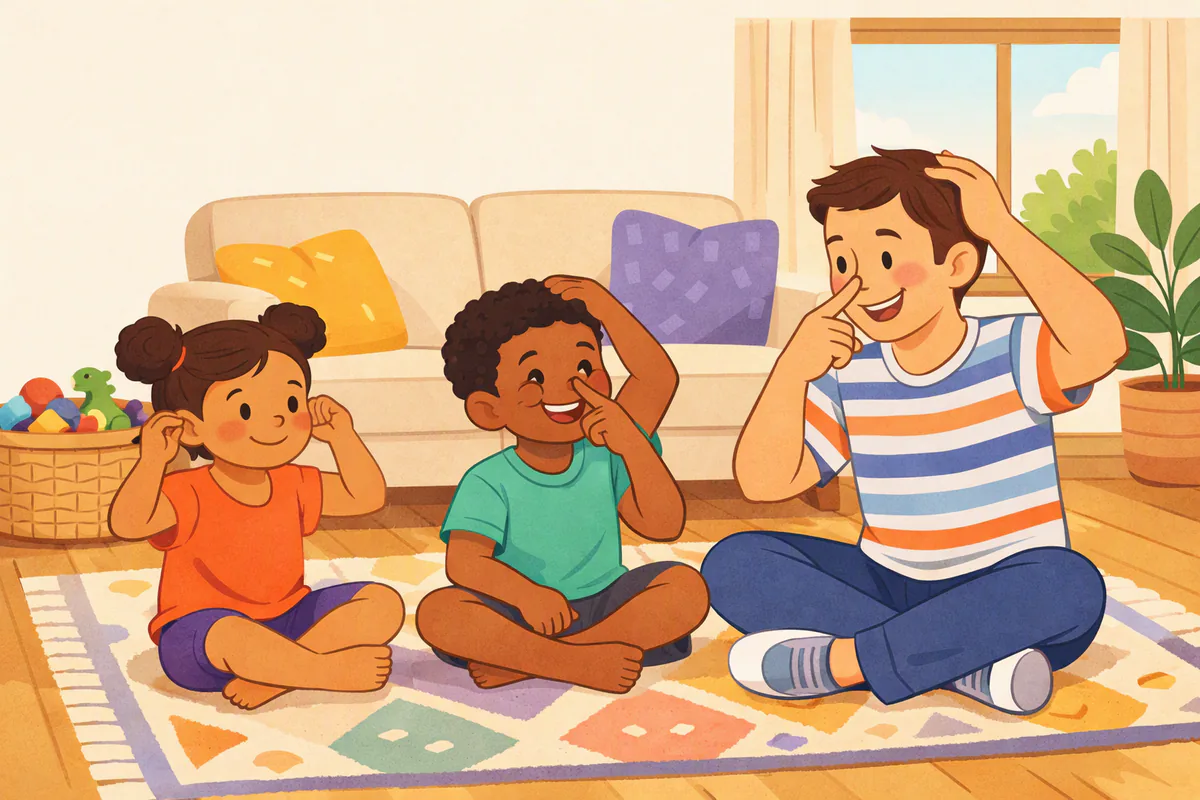
Body parts are the most active Spanish words a child can learn: you point, you touch, you wiggle, and that movement helps 4- to 9-year-olds remember them. Here are 12 body parts in Spanish with English meanings, a "say it" guide and Lumi's audio, then Simón dice, a song and the phrases kids actually use.
Body parts in Spanish, with audio
| Spanish | English | Say it | Listen |
|---|---|---|---|
| cabeza | head | kah-BEH-sah | |
| ojos | eyes | OH-hohs | |
| nariz | nose | nah-REES | |
| boca | mouth | BOH-kah | |
| orejas | ears | oh-REH-hahs | |
| manos | hands | MAH-nohs | |
| pies | feet | PYEHS | |
| cabello | hair | kah-BEH-yoh | |
| brazos | arms | BRAH-sohs | |
| piernas | legs | PYEHR-nahs | |
| dedos | fingers | DEH-dohs | |
| dientes | teeth | DYEHN-tehs |
Cabello is the word in the app; pelo (PEH-loh) is just as common for hair. Voices: Lumi (AI-generated voice).
Listen for the breathy j in ojos and orejas (OH-hohs, oh-REH-hahs) and the z in cabeza and nariz, which sounds like s in Latin American Spanish. In cabello, ll sounds like y.
Play Simón dice (Simon says)
Simón dice works exactly like the English game, and it gets kids saying and hearing body parts dozens of times without noticing.
- The leader says Simón dice: tócate la nariz (see-MOHN DEE-seh, TOH-kah-teh lah nah-REES), "Simon says: touch your nose". Everyone touches their nose.
- If the leader skips Simón dice and just says Tócate las orejas, anyone who moves is out (or, for little ones, gets a tickle).
- After a few rounds, your child becomes the leader. Giving orders in Spanish is the best practice of all.
Useful orders: tócate la cabeza (touch your head), levanta las manos (leh-BAHN-tah lahs MAH-nohs, raise your hands), abre la boca (open your mouth), cierra los ojos (SYEH-rrah lohs OH-hohs, close your eyes).
A song: Cabeza, hombros, rodillas y pies
Kids sing the Spanish version of "Head, Shoulders, Knees and Toes" to the same tune: cabeza, hombros, rodillas y pies. Two new words: hombros (OHM-brohs) are shoulders, rodillas (roh-DEE-yahs) are knees. Sing it slowly first, then faster each round.
"The hands", not "my hands"
Spanish often uses la or las ("the") where English says "my" or "your":
- Lávate las manos. (LAH-bah-teh lahs MAH-nohs): "Wash your hands."
- Me duele la cabeza. (meh DWEH-leh lah kah-BEH-sah): "My head hurts."
- Abre la boca. (AH-breh lah BOH-kah): "Open your mouth."
Bath time and bedtime are perfect moments for these: you already wash hands, brush teeth (los dientes) and dry feet every day. For more ways to build Spanish into routines you already have, read our guide to teaching your child Spanish at home.
In the Lumi Kids app, the body is the seventh world of the free Seed level, "My Body": cabeza, ojos, nariz, boca, orejas, manos, pies and cabello, with sentences like Tócate la cabeza. Your child hears them, matches them to pictures and then uses them in a talk with Lumi, the AI owl. See the app.
Free body parts in Spanish worksheet (PDF)
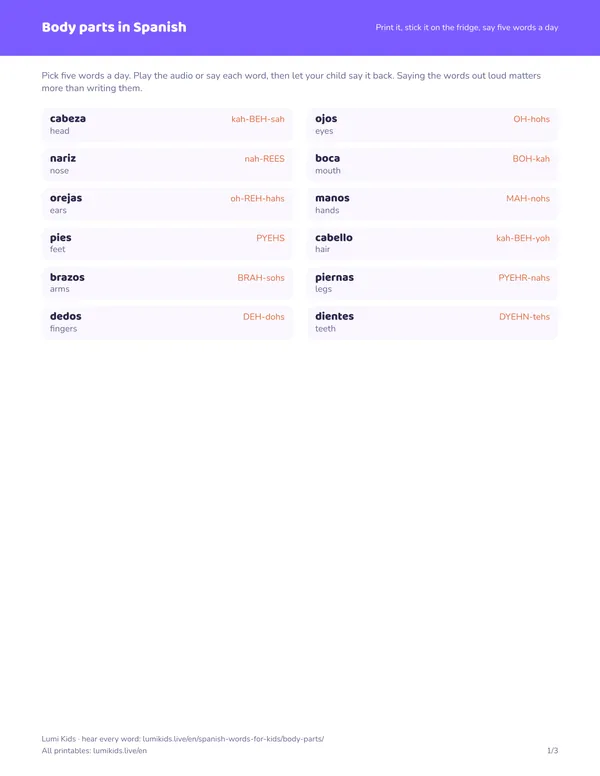
Three pages: the body parts with a say-it guide, a matching worksheet (Spanish to English) and a writing sheet. Free to print at home or in class.
Download the PDF: Body parts in SpanishMore Spanish words for kids
- Family words in Spanish: Mi papá tiene ojos verdes.
- Colors in Spanish: describe eyes and hair.
- Numbers in Spanish: count fingers and toes.
- All Spanish words for kids.
Frequently asked questions
How do you say the body parts in Spanish?
Head is cabeza (kah-BEH-sah), eyes ojos (OH-hohs), nose nariz (nah-REES), mouth boca (BOH-kah), ears orejas (oh-REH-hahs), hands manos (MAH-nohs), feet pies (PYEHS) and hair cabello (kah-BEH-yoh) or pelo. The table on this page has 12 body parts with audio.
How do you play Simon says in Spanish?
It is called Simón dice. The leader says Simón dice: tócate la cabeza ("Simon says: touch your head") and everyone does it; if the leader gives an order without Simón dice, nobody should move.
Is there a Spanish version of Head, Shoulders, Knees and Toes?
Yes, kids sing Cabeza, hombros, rodillas y pies to the same tune. Hombros (OHM-brohs) are shoulders and rodillas (roh-DEE-yahs) are knees.
Is hair cabello or pelo in Spanish?
Both are correct. Cabello is the word Lumi uses in the app; pelo is very common in everyday speech across Latin America and Spain.
How does a child say something hurts in Spanish?
Me duele la cabeza (meh DWEH-leh lah kah-BEH-sah) means "My head hurts". Swap the body part: Me duele la mano, "My hand hurts".
In the Lumi Kids app, Lumi the AI owl talks with your child, corrects gently and hands out stars. Ages 4–9, no ads. The first two levels and the first minute of live conversation are free.
Download on the App Store
The team behind Lumi Kids. Articles are written using published research on early-childhood language acquisition and the curriculum built into the app, and are reviewed and updated over time. Questions or corrections: hello@lumikids.live