Lumi Kids
Spanish for Kids: How to Practice Beyond the Classroom Today
Practical ways to help a child practice Spanish outside school: free vocabulary, local classes and tutors, a homeschool routine, and where an app fits.
In the US most children get little or no language teaching before middle school; in England a foreign language is part of the curriculum from age 7. This guide explains what schools offer, what immersion means and how to support it at home.
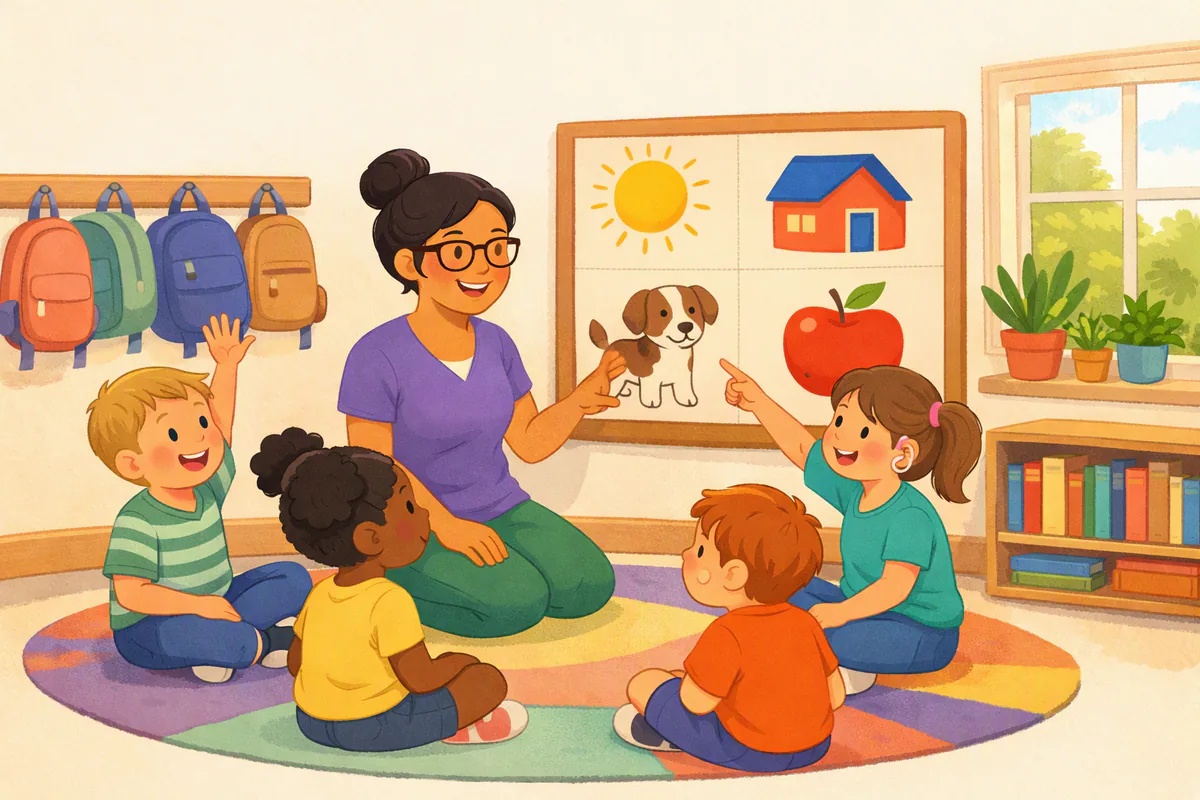
In the US there is no national curriculum for languages: states and districts decide, and elementary schools often offer none. When they do, it is usually Spanish, either as a class a few times a week (FLES) or as an immersion program where part of the school day is taught in the language. Most students meet a language as a subject in middle or high school, and schools, districts and states can award a Seal of Biliteracy to students who reach proficiency in two or more languages by graduation.
In England a foreign language is a statutory subject at key stage 2 (Years 3–6, ages 7–11). Schools choose the language; French is the most widely taught in primary schools.
Whatever your school offers, a few minutes at home make the difference between a subject your child forgets over the summer and a language they keep. The sections below explain the options and how to help.
The names schools use, and how common each program was in January 2024.
| Program | What it means | Share of US public elementary schools |
|---|---|---|
| FLES | Foreign Language in the Elementary School: a regular language class, often a few times a week. | No separate figure: 20% of schools offer world-language classes of some kind |
| Exploratory | A short taste of one or several languages and cultures, not aimed at fluency. | No separate figure |
| One-way immersion | Mostly English-speaking students learn school subjects in the new language for part of the day. | 7% |
| Two-way immersion (dual language) | English speakers and speakers of the other language learn together in both languages. | 9% |
| Developmental and heritage | Programs that build the home language of students who already speak it. | 4% developmental, 1% heritage |
If your child's school offers a language, it is most likely Spanish, as a class a few times a week.
Practical ways to help a child practice Spanish outside school: free vocabulary, local classes and tutors, a homeschool routine, and where an app fits.
In immersion, children learn school subjects in the new language. Families who don't speak it at home can still choose it.
Considering a dual language or Spanish immersion program? What the types mean, how common they are, pros and cons, questions to ask and how to help at home.
Homeschooling families can build Spanish into the week without a full curriculum. One topic a week, 15 minutes a day, works for ages 4–9.
More ideas for parents who don't speak Spanish: teach your child Spanish at home.
In England a foreign language is part of the national curriculum for Years 3 to 6 (ages 7–11). Any modern or ancient language may be taught, and pupils should make substantial progress in one.
First words with audio for the languages most UK schools teach: French for kids and Spanish for kids.
Checked on October 5, 2026.
Some do. In January 2024, 20% of US public elementary schools offered world-language classes, mostly Spanish (NCES). Middle and high schools offer them far more often.
FLES stands for Foreign Language in the Elementary School: a regular language class as a subject, often a few short lessons a week. It differs from immersion, where other subjects are taught in the language.
In one-way immersion, most students are learning the new language. In two-way immersion, also called dual language, about half the class already speaks it at home, and everyone learns in both languages.
Yes; one-way and two-way programs both include children from English-speaking homes. Read in English at home, ask about the day and show interest. Our article on dual language immersion covers the questions to ask.
At key stage 2, Years 3 to 6 (ages 7–11), a foreign language is part of the national curriculum. Schools may start earlier, in key stage 1, but they don't have to. French is the most widely taught.
An award given by a school, district or state in the US to students who reach proficiency in two or more languages by high school graduation. Starting a language early makes it easier to reach.
Lumi Kids gives your child a few minutes of listening and speaking a day, in Spanish, French or eight more languages. The first two levels are free.