Lumi Kids
Online Spanish Classes for Kids: Costs, Formats, How to Choose
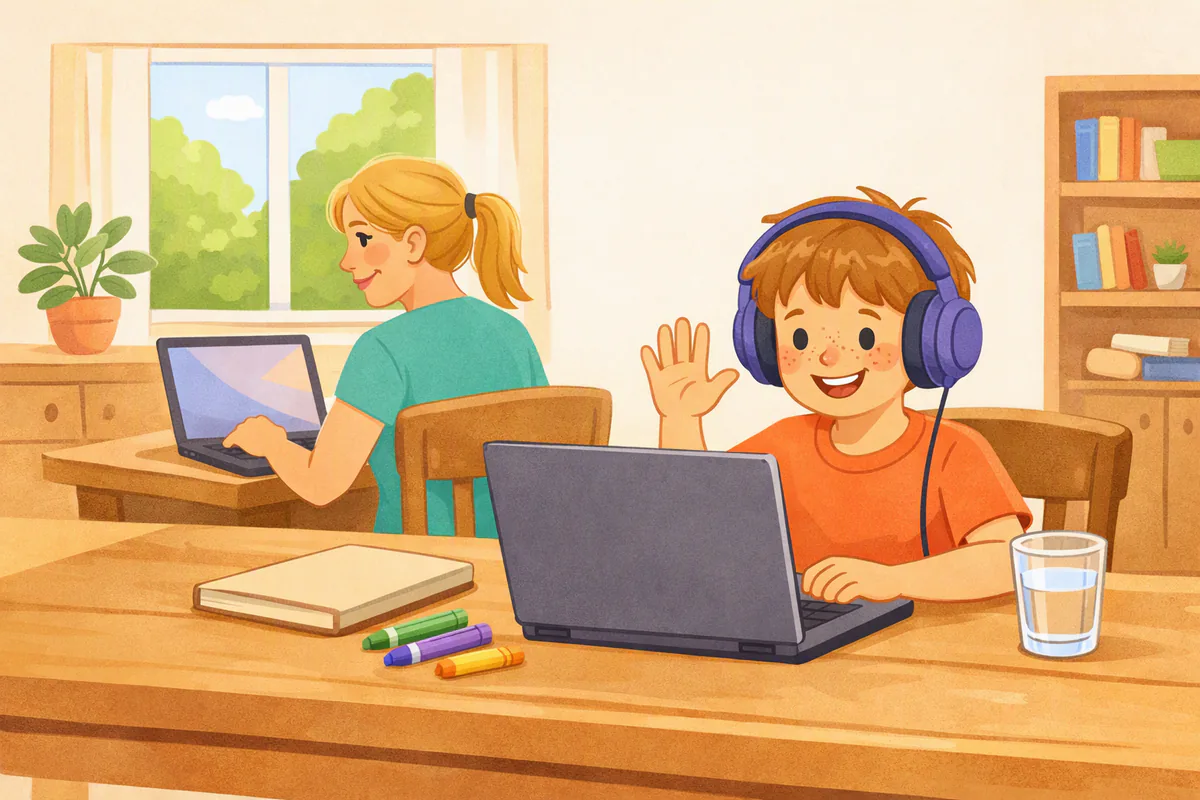
Online Spanish classes for kids usually come as 25-minute 1-on-1 lessons with a teacher from an online school, small group classes, or classes listed by many teachers on a marketplace. For 1-on-1 lessons, the two schools we checked list prices starting between $11 and $18 per 25-minute class (October 5, 2026). For children aged 4–9, the best class is short, playful and keeps your child talking for most of the time.
If your child's school offers little or no Spanish, which is true for most US elementary schools, an online class can give your child something hard to find at home: a real person who speaks Spanish, listens and answers back. This guide compares the formats, shows dated prices, and explains how to judge a trial class in 25 minutes.
What kinds of online Spanish classes for kids are there?
| Format | How it works | Good for |
|---|---|---|
| 1-on-1 online school | You book lessons with the school's teachers, often in packages | Beginners, shy children, families who want a set curriculum |
| Small group class | A teacher with a few children at the same level | Sociable children, lower cost per child |
| Marketplace | Many independent teachers list classes; each class page shows its own price and schedule | Families who want choice of topics, times and teachers |
| School or district program | Online or hybrid classes run by a school, sometimes free for students | Families whose district offers it |
| Self-paced app | No live teacher; the app gives exercises and, in some apps, speaking practice | Daily practice between classes |
Outschool is one such marketplace: it lists live online classes for ages 3–18, including Spanish, taught by many different teachers, so prices, class sizes and schedules differ from one listing to the next. Compare the price per session and the class size on each listing.
How much do online Spanish classes for kids cost?
Here are the prices two online schools publish, checked on October 5, 2026. We picked them because both show their prices openly; it is not a ranking.
| Provider | Format | Listed price |
|---|---|---|
| Homeschool Spanish Academy | 1-on-1, 25 minutes, native Spanish teachers | $16 per class (30-class package, $480), $12 (60 classes, $720), $11 (90 classes, $990) |
| Homeschool Spanish Academy | Two students together, 25 minutes | $24, $18 or $16 per class for both ($12, $9 or $8 per student) |
| Kids' Club Spanish School | 1-on-1, 25 minutes, native teachers, ages 5–13 | From $18 per class; free trial class |
Sources: Homeschool Spanish Academy pricing and Kids' Club Spanish School pricing.
To compare offers, turn every price into a monthly cost for your rhythm. With two 25-minute classes a week (about 8–9 a month), $12–$18 per class comes to roughly $96–$162 a month. Ask about cancellation rules too: Kids' Club, for example, does not charge for rescheduling or canceling with 24 hours' notice.
Are online classes right for a 4- or 5-year-old?
They can be, with the right expectations. Young children learn through play, so a good class for this age looks more like a song-and-game session than a lesson.
| Age | What works online | What to avoid |
|---|---|---|
| 4–5 | 1-on-1 or a group of 2–3, songs, puppets, pictures, movement, 20–25 minutes, a parent nearby | Long sessions, slides full of text, large groups |
| 6–7 | 25-minute 1-on-1 or small group, games with simple rules, short dialogues | Grammar explanations, homework sheets every class |
| 8–9 | Structured lessons, reading and writing, conversation about interests, 25–50 minutes | Content for toddlers; classes where the teacher talks most of the time |
If your 4-year-old can't sit in front of a screen for more than a few minutes, that's normal. Start with songs and games at home, and try a class again in a few months.
Is a 1-on-1 or a group class better?
| 1-on-1 | Small group | |
|---|---|---|
| Speaking time for your child | The highest | Shared |
| Price per child | Higher | Lower |
| Adapts to your child | Fully | Partly |
| Motivation from peers | None | Yes |
| Best for | Beginners, shy children, ages 4–6 | Sociable children, ages 7–9, siblings |
Siblings can sometimes share a class: Homeschool Spanish Academy, for example, offers paired classes and recommends them for children within three grade levels of each other.
How do you judge a trial class?
A free or low-cost trial is the best way to choose. During the trial, sit nearby (or watch the recording if the school offers one) and check these points:
- How long does your child speak? In a good class for young children, your child says words and answers questions throughout, not only at the end.
- Does the teacher use mostly Spanish, with gestures, pictures and objects to make it clear?
- Does the teacher adapt when your child is tired, shy or excited?
- Is it playful for the age? Songs and movement for 4–5, games for 6–7, real conversation for 8–9.
- Does the class end with something to practice at home, such as a song or five words?
- How did your child feel afterwards? Ask: "Do you want to talk to her again?"
Also ask practical questions: who the teachers are and how they are trained for young children, whether classes are recorded and who can see the recordings, how cancellations work, and what happens if the teacher changes.
Are there free online Spanish classes for kids?
Some options cost nothing:
- Free trial classes from online schools (useful for comparing teachers).
- Public libraries, which may offer bilingual story times, Spanish books and audiobooks, and sometimes access to language programs.
- School and district programs, including after-school clubs.
- Free songs and videos for listening practice; pair them with talking at home.
- Free levels of apps for daily practice between classes.
Free resources are great for listening. What's hard to get for free on a regular schedule is a person who listens to your child and answers in Spanish, which is what paid classes provide.
Should you choose a class, an app or both?
| Online class | App | Both | |
|---|---|---|---|
| Real conversation | Yes | Limited (depends on the app) | Yes |
| Daily contact | No (usually 1–3 times a week) | Yes | Yes |
| Cost | Per class | Free tier or subscription | Higher |
| Best for | Speaking with a person | Practice between classes | Steady progress |
Daily speaking practice between classes. Lumi Kids is an iPhone and iPad app for ages 4–9 in which Lumi, an AI owl, explains in English and asks your child to answer out loud in Spanish (or one of nine other languages). It doesn't replace a teacher, but it fills the days between classes. The first two levels and 60 seconds of live talk are free; Lumi Plus ($14.99 a month or $119.99 a year on the US App Store, checked October 5, 2026) unlocks the last two levels and 10 minutes of live talk a week. See how it works.
Our comparison of Spanish apps for kids lists what each app makes your child do, and our guide on how to teach your child Spanish at home shows a daily routine that works with any class. If your child already has Spanish at school, Spanish for kids beyond the classroom explains how to support it.
The bottom line
The right online Spanish class for a child aged 4–9 is short, playful and keeps your child talking. Compare formats by speaking time and cost per month, use free trials to pick a teacher your child likes, and add a few minutes of Spanish at home every day. A class gives your child a conversation partner; the daily routine makes the language stay.
Frequently asked questions
How much do online Spanish classes for kids cost?
Prices vary by format. For 25-minute 1-on-1 classes, Homeschool Spanish Academy lists $16, $12 or $11 per class in packages of 30, 60 or 90 classes, and Kids' Club Spanish School lists classes from $18 (both checked October 5, 2026). Marketplaces show a different price on each class page. Two classes a week (8–9 a month) at $12–$18 add up to roughly $96–$162 a month.
Are online Spanish classes good for a 5-year-old?
They can be, if the class is short (about 25 minutes), 1-on-1 or a very small group, and full of songs, pictures and movement. Many 5-year-olds need a parent nearby to help with the device and to stay focused. If your child loses interest after a few minutes, start with songs and games at home and try a class again in a few months.
Is a group class or a 1-on-1 class better?
A 1-on-1 class gives your child the most speaking time and a teacher who adapts to them. A small group class costs less per child and suits children who are motivated by peers. For shy children or beginners aged 4–6, 1-on-1 usually works better; sociable 7- to 9-year-olds often enjoy groups.
How often should my child have an online Spanish class?
Twice a week is a workable rhythm for young children, because it keeps the language fresh without overloading the week. More important than the number of classes is practice in between: a few minutes a day of songs, words and speaking at home.
Are there free online Spanish classes for kids?
Many online schools offer a free trial class, and some public libraries and school districts offer free language programs. Free videos and songs are useful for listening, but they don't replace a teacher who listens to your child and answers back.
What should I ask before booking online Spanish lessons?
Ask how long each class lasts, who the teachers are and how they are trained for young children, how much of the class your child will speak, what the cancellation policy is, whether classes are recorded, and whether there is a free or low-cost trial.
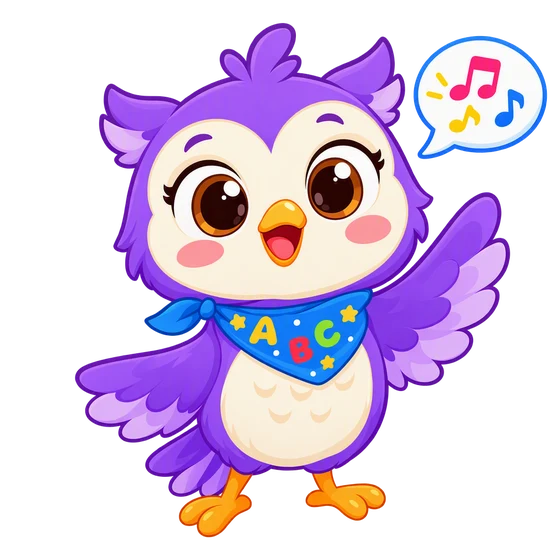
In the Lumi Kids app, Lumi the AI owl talks with your child, corrects gently and hands out stars. Ages 4–9, no ads. The first two levels and the first minute of live conversation are free.
Download on the App Store
The team behind Lumi Kids. Articles are written using published research on early-childhood language acquisition and the curriculum built into the app, and are reviewed and updated over time. Questions or corrections: hello@lumikids.live