Lumi Kids
Japanese for kids
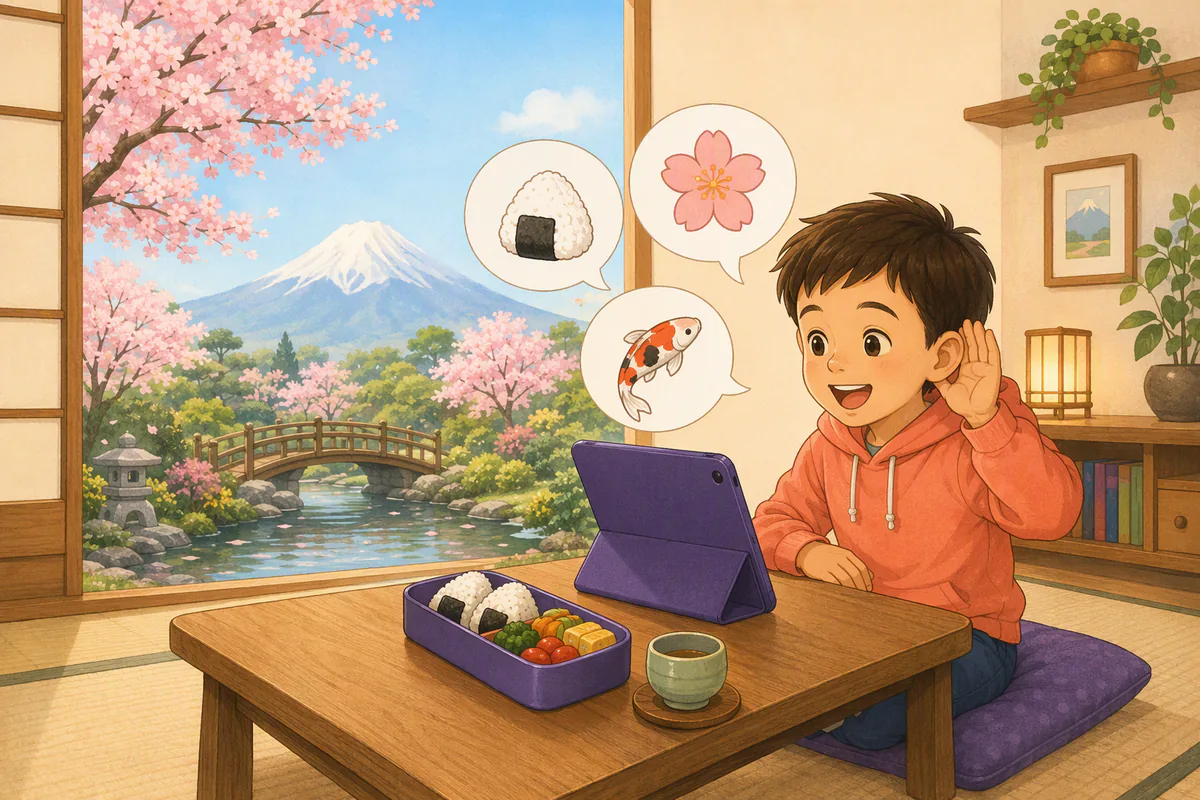
Japanese sounds are friendlier than its writing suggests: five clear vowels, much like Spanish. Here are the 64 first words of Lumi Kids in hiragana and katakana, with their romaji (Latin letters) and Lumi's voice for every word.
Guides
- Best Age to Learn a Second Language: A Guide for Parentswhat research says about starting age
- How to Raise a Bilingual Child: Methods That Fit Real Familiesfor families who speak Japanese at home
- Best Language Learning Apps for Kids in 2026: Parent's Guidehow to choose an app for a 4- to 9-year-old
Why Japanese?
Few US schools teach Japanese, about 1% of public schools (NCES, January 2024), but interest is real: 11% of US adults say schools should offer it (Pew Research Center, 2026). Many children come to Japanese through a family connection, a trip or stories they love, and that curiosity is a great motivator.
The spoken language is a good fit for young learners. Japanese has five vowels, said the same way every time, and words are made of simple syllables: ne-ko (cat), i-nu (dog), sa-ka-na (fish).
Writing is the long project. Children usually start with hiragana, then katakana, which is used for borrowed words such as banana and orenji; kanji come later. For a 4- to 9-year-old, listening and speaking come first.
The 64 first Japanese words
These are the 64 words of the Seed level, written in hiragana or katakana, with romaji (Hepburn, with a line over long vowels: ō, ū). Tap a card and Lumi says the word. Japanese has no strong stress like English, so say every syllable evenly.
Tap a card and Lumi says the word; ▶ next to a sentence reads it, and “Play all in order” plays a whole group. Voices: Lumi (AI-generated voice).
8 words · 8 sentences
Hello World · こんにちは、 せかい!
| Sentence | English | listen |
|---|---|---|
| こんにちは、 わたし は ルミ です!Konnichiwa, watashi wa Rumi desu! | Hello, I am Lumi! | |
| さようなら、 また あいましょう!Sayōnara, mata aimashō! | Goodbye, see you! | |
| はい、 これ が すき です!Hai, kore ga suki desu! | Yes, I like it! | |
| いいえ、 けっこう です。Iie, kekkō desu. | No, thank you. | |
| どうも ありがとう ございます!Dōmo arigatō gozaimasu! | Thank you very much! | |
| おてつだい を おねがいします。Otetsudai o onegaishimasu. | Please help me. | |
| あなた は わたし の ともだち です。Anata wa watashi no tomodachi desu. | You are my friend. | |
| おはよう ございます、 ルミ!Ohayō gozaimasu, Rumi! | Good morning, Lumi! |
8 words · 8 sentences
Colors · いろ
| Sentence | English | listen |
|---|---|---|
| りんご は あか です。Ringo wa aka desu. | The apple is red. | |
| そら は あお です。Sora wa ao desu. | The sky is blue. | |
| おひさま は きいろ です。Ohisama wa kiiro desu. | The sun is yellow. | |
| かえる は みどり です。Kaeru wa midori desu. | The frog is green. | |
| オレンジ が すき です。Orenji ga suki desu. | I like orange. | |
| ぶどう は むらさき です。Budō wa murasaki desu. | The grapes are purple. | |
| ぶた は ピンク です。Buta wa pinku desu. | The pig is pink. | |
| くも は しろ です。Kumo wa shiro desu. | The cloud is white. |
8 words · 8 sentences
Numbers · かず
4 and 7 have two readings each; children usually count よん (yon) and なな (nana), as Lumi does, and also hear し (shi) and しち (shichi).
| Sentence | English | listen |
|---|---|---|
| りんご を ひとつ もって います。Ringo o hitotsu motte imasu. | I have one apple. | |
| あひる が にわ みえます。Ahiru ga niwa miemasu. | I see two ducks. | |
| ふうせん が みっつ あります!Fūsen ga mittsu arimasu! | Three balloons! | |
| カップケーキ が よっつ あります。Kappukēki ga yottsu arimasu. | Four cupcakes. | |
| ほし が いつつ あります!Hoshi ga itsutsu arimasu! | Five stars! | |
| いちご が むっつ あります。Ichigo ga muttsu arimasu. | Six strawberries. | |
| さかな が ななひき います。Sakana ga nanahiki imasu. | Seven fish. | |
| 花 が はっぽん あります。Hana ga happon arimasu. | Eight flowers. |
8 words · 8 sentences
Animals · どうぶつ
| Sentence | English | listen |
|---|---|---|
| ねこ は ニャー と なきます。Neko wa nyā to nakimasu. | The cat says meow. | |
| いぬ は うれしそう です。Inu wa ureshisō desu. | The dog is happy. | |
| とり は とべます。Tori wa tobemasu. | The bird can fly. | |
| さかな は およげます。Sakana wa oyogemasu. | The fish can swim. | |
| うま は おおきい です。Uma wa ōkii desu. | The horse is big. | |
| うし は モー と なきます。Ushi wa mō to nakimasu. | The cow says moo. | |
| ライオン は つよい です。Raion wa tsuyoi desu. | The lion is strong. | |
| うさぎ は はねます。Usagi wa hanemasu. | The rabbit jumps. |
8 words · 8 sentences
My Family · わたし の かぞく
The family words on the cards are the polite forms used when talking to or about family: おかあさん (okāsan, mother), おねえさん (onēsan, older sister) and おにいさん (oniisan, older brother).
| Sentence | English | listen |
|---|---|---|
| おかあさん が だいすき です。Okāsan ga daisuki desu. | I love my mom. | |
| おとうさん は せ が たかい です。Otōsan wa se ga takai desu. | My dad is tall. | |
| おねえさん は やさしい です。Onēsan wa yasashii desu. | My sister is kind. | |
| おにいさん は あそびます。Oniisan wa asobimasu. | My brother plays. | |
| おばあちゃん は クッキー を やきます。Obāchan wa kukkī o yakimasu. | Grandma bakes cookies. | |
| おじいちゃん は おはなし を します。Ojiichan wa ohanashi o shimasu. | Grandpa tells stories. | |
| あかちゃん は ちいさい です。Akachan wa chiisai desu. | The baby is small. | |
| これ は わたし の かぞく です。Kore wa watashi no kazoku desu. | This is my family. |
8 words · 8 sentences
Food · たべもの
| Sentence | English | listen |
|---|---|---|
| わたし は りんご を たべます。Watashi wa ringo o tabemasu. | I eat an apple. | |
| バナナ は きいろい です。Banana wa kiiroi desu. | The banana is yellow. | |
| パン が すき です。Pan ga suki desu. | I like bread. | |
| わたし は ぎゅうにゅう を のみます。Watashi wa gyūnyū o nomimasu. | I drink milk. | |
| あさごはん に たまご を たべます。Asagohan ni tamago o tabemasu. | An egg for breakfast. | |
| チーズ は おいしい です。Chīzu wa oishii desu. | Cheese is yummy. | |
| みず を ください。Mizu o kudasai. | I want water, please. | |
| おたんじょうび の ケーキ です!Otanjōbi no kēki desu! | Happy birthday cake! |
8 words · 8 sentences
My Body · わたし の からだ
| Sentence | English | listen |
|---|---|---|
| あたま に さわって ください。Atama ni sawatte kudasai. | Touch your head. | |
| め は ふたつ あります。Me wa futatsu arimasu. | I have two eyes. | |
| これ は わたし の はな です。Kore wa watashi no hana desu. | This is my nose. | |
| くち を あけて ください。Kuchi o akete kudasai. | Open your mouth. | |
| みみ で おと を ききます。Mimi de oto o kikimasu. | I hear with my ears. | |
| て を たたいて ください!Te o tataite kudasai! | Clap your hands! | |
| あし を どんどん ふみならして ください!Ashi o dondon fuminarashite kudasai! | Stomp your feet! | |
| わたし の かみ は くるくる です。Watashi no kami wa kurukuru desu. | My hair is curly. |
8 words · 8 sentences
Toys & Home · おもちゃ と おうち
| Sentence | English | listen |
|---|---|---|
| ボール を けります。Bōru o kerimasu. | I kick the ball. | |
| くるま は はやい です。Kuruma wa hayai desu. | The car is fast. | |
| にんぎょう で あそびます。Ningyō de asobimasu. | I play with my doll. | |
| ほん を よみます。Hon o yomimasu. | I read a book. | |
| くま の ぬいぐるみ を だきしめます。Kuma no nuigurumi o dakishimemasu. | I hug my teddy bear. | |
| ベッド で ねます。Beddo de nemasu. | I sleep in my bed. | |
| いす に すわって ください。Isu ni suwatte kudasai. | Sit on the chair. | |
| これ は わたし の いえ です。Kore wa watashi no ie desu. | This is my house. |
New sounds
| Sound or letter | What to know |
|---|---|
| a, i, u, e, o | Short and clear, as in Spanish: aka (red) is ah-kah, both syllables even. |
| Long vowels | A long vowel is held twice as long and changes the word: obāsan (grandmother) and obasan (aunt) are different words. |
| r | Between an r, an l and a light d, made with one tap of the tongue: raion (lion). |
| tsu | Like the ts in "cats", plus a short u: tsuki (moon). |
| Small っ | A tiny pause before a consonant: beddo (bed) has a held d. |
| Polite endings | Arigatō gozaimasu (thank you very much) and onegaishimasu (please) are the polite forms children use with adults. |
Practice at home
- Greetings at fixed times. Ohayō in the morning, itadakimasu before a meal, oyasumi at bedtime: Japanese families use these every day, and so can you.
- Count with fingers. Ichi, ni, san, yon, go: five numbers, five fingers.
- Kana later. When your child is ready to read, start with hiragana; a chart on the wall and five new letters a week is plenty.
How Lumi teaches it
In Lumi Kids your child starts at Seed, the first of four levels (Seed, Sprout, Sapling and Tree, 72 worlds in all). The 64 words on this page are Seed's eight worlds. Every world has at least six exercises: learn the words, listen and tap, card match, true or false, listen in order and talk with Lumi; higher levels add sentence building, stories and role play. Lumi explains in English and says the new words in Japanese.
The app teaches Japanese by listening and speaking; the cards show the words in kana with romaji, so you can follow along.
Seed and Sprout are free, with 60 seconds of live talk to try. Lumi Plus unlocks Sapling and Tree and adds 10 minutes of live talk a week: $14.99 a month or $119.99 a year, and the yearly plan starts with a 7-day free trial for new subscribers (App Store US, checked October 5, 2026). Before live talk is turned on, the app tells you, the parent, that Lumi is an AI. Lumi Kids does not record or store your child's voice. More about the app.
Sources
Facts on this page come from these pages (checked October 5, 2026) and from the app itself.
- Pew Research Center (August 3, 2026): What do Americans think about language learning in US schools? (October 5, 2026)
- ACTFL (March 2026): The State of K-12 World Language Education, data from the NCES School Pulse Panel, January 2024 (October 5, 2026)
- App Store (US): Lumi Kids: Learn Languages (October 5, 2026)
Frequently asked questions
Is Japanese hard for young children?
Speaking is easier than most adults think: five vowels and simple syllables. Reading is the long part, because there are three scripts. Start with listening and speaking and add hiragana when your child is interested.
Should my child learn hiragana first?
When your child starts reading Japanese, yes: Japanese children learn hiragana first, then katakana, then kanji. Before that, listening and speaking are enough.
What is romaji?
Romaji is Japanese written in Latin letters. This page uses the Hepburn system, with a line over long vowels (ō, ū), so English speakers can read the words aloud.
Japanese with Lumi, a few minutes a day
Your child hears every word in Japanese, plays with it and then speaks with Lumi. The first two levels are free.