Lumi Kids
Best Korean Apps for Kids: Hangul, Words and Speaking
A good Korean app for a child gives clear native audio, gets your child saying words out loud and, when the time comes, teaches Hangul sound by sound. For ages 4–6, choose listening and speaking apps plus gentle letter videos; at 7–9, a phonics app for Hangul next to speaking practice; older children need longer conversations.
How we compared
We used only facts each provider states on its own site or store listings, and put the same questions to every app. For Korean, these are the ones that sort the field:
- Alphabet or language. Some Korean apps teach Hangul, the alphabet; others teach words and phrases by ear. We say which, from the provider's own description.
- Speaking practice. Korean has three kinds of k, t, p and ch: plain, breathy and tense (ㄱ, ㅋ, ㄲ). An English speaker's ear misses the difference at first, so hearing and copying matter. The table says whether an app uses speech recognition, an AI conversation or no speaking at all.
- Reading needed. Hangul is regular and quick to learn, but a 4-year-old still should not need it to use the app.
- Who it is for. Some apps are written for Korean children abroad or for families moving to Korea; we note this where stated.
- Ages, format, pricing model, ads and offline use, as the provider gives them. No prices.
| App | Product | Ages (as stated) | Format | Speaking practice | Reading needed | Pricing model | Platforms | Sources |
|---|---|---|---|---|---|---|---|---|
| Dinolingo | Dinolingo Korean | 2–14 | Lessons | Speech recognition | No | Subscription | iPhone/iPad, Android, Web | [1] [2] [3] [4] [5] [6] |
| Duolingo | Duolingo Korean course | Not stated | Lessons | Speech recognition | Yes | Free part + paid | iPhone/iPad, Android, Web | [7] [8] [9] [10] [11] |
| Gus on the Go | Gus on the Go: Korean | 0–5 | Games | Not stated | No | One-time purchase | iPhone/iPad, Android | [12] [13] [14] [15] [16] |
| Korean Bridge: Hangul for Kids | 4–8 | Games | No | No | Free | iPhone/iPad, Android | [17] [18] [19] | |
| Little Pim | Little Pim Korean | 0–6 | Videos | No | No | Subscription | iPhone/iPad, Android, Web | [20] [21] [22] [23] |
| Lumi Kids (our app) | 4–12 | AI voice tutor | Conversation with AI | No | Free part + paid | iPhone/iPad, Android | [24] [25] | |
| MUZZY BBC | MUZZY Korean | Not stated | Videos | Not stated | No | Subscription | iPhone/iPad, Web | [26] [27] [28] [29] |
| Pinkfong Learn Korean: Hangul | 0–5 | Videos | Not stated | Not stated | Free part + paid | iPhone/iPad, Android | [30] [31] [32] | |
| Sojunghangeul | Sojunghangeul - Phonics & Play | 6–8 | Games | Not stated | Not stated | Not stated | iPhone/iPad, Android | [33] [34] [35] |
| Unuhi | Unuhi bilingual books (Korean) | 3–8+ | Reading | Not stated | Not stated | Free part + paid | iPhone/iPad, Android | [36] [37] [38] |
| ZingyBear for Kids apps | Korean for Kids: Learn Hangul | 3–9 | Lessons | Not stated | No | Free part + paid | iPhone/iPad | [39] [40] |
Facts as each provider states them on its own site or store listing, checked on October 27, 2026. No prices (they differ by country and change), no ratings. Lumi Kids is our app.
Sources
- https://www.dinolingo.com/learn-korean-for-kids
- https://dinolingo.com/
- https://dinolingo.com/language-courses/
- https://dinolingo.com/dinolingo-app/
- https://dinolingo.com/dinolingo-launches-new-speaking-feature/
- https://apps.apple.com/us/app/dinolingo-kids-learn-languages/id1537076111
- https://apps.apple.com/us/app/duolingo-learn-languages/id570060128
- https://play.google.com/store/apps/details?id=com.duolingo
- https://www.duolingo.com/privacy
- https://www.duolingo.com/terms
- https://blog.duolingo.com/count-on-duolingo-for-flexible-language-learning-this-school-year/
- https://apps.apple.com/us/app/gus-on-the-go-korean/id553962211
- https://play.google.com/store/apps/details?id=com.toojuice.android.gus.korean.southkorea
- https://www.gusonthego.com/
- https://www.gusonthego.com/gus-on-the-go-faq/
- https://play.google.com/store/apps/developer?id=toojuice,+LLC
- https://apps.apple.com/us/app/korean-bridge-hangul-for-kids/id6801205183
- https://pifl-labs.com/en/apps/pipi-bridge/
- https://play.google.com/store/apps/details?id=com.pifl.pipi.bridge
- https://www.littlepim.com/
- https://www.littlepim.com/faq
- https://apps.apple.com/us/app/little-pim-video/id1492323426
- https://play.google.com/store/apps/details?id=com.littlepim.videoplayer
- https://apps.apple.com/us/app/lumi-kids-learn-languages/id6797690284
- https://play.google.com/store/apps/details?id=us.appfusion.speaklykids&hl=en
- https://www.muzzybbc.com/
- https://www.muzzybbc.com/pages/how-muzzy-works
- https://www.muzzybbc.com/pages/bbc-all-languages
- https://apps.apple.com/us/app/muzzy-kids-language-learning/id6469683059
- https://play.google.com/store/apps/details?id=kr.co.smartstudy.hangulganada_android_googlemarket
- https://apps.apple.com/us/app/%ED%95%91%ED%81%AC%ED%90%81-%EA%B0%80%EB%82%98%EB%8B%A4-%ED%95%9C%EA%B8%80/id1239679037
- https://www.pinkfong.com/en/
- https://play.google.com/store/apps/details?id=com.h2kresearch.preciousHangul
- https://apps.apple.com/us/app/sojunghangeul-phonics-play/id1372681786
- https://www.sojunghangeul.com/
- https://unuhi.com/
- https://apps.apple.com/us/app/unuhi-bilingual-books/id1394567278
- https://play.google.com/store/apps/details?id=com.oxfordappdevelopment.unuhi
- https://apps.apple.com/us/app/korean-for-kids-learn-hangul/id6757668727
- https://zingybear.com/apps/
Each row's numbers lead to the provider pages listed under the table.
Little Pim
Little Pim Korean is for babies, toddlers and pre-K (ages 0–6): 5-minute episodes with 360+ words and phrases, no reading and no speaking task. The subscription includes 12 languages and also runs on TV devices.
Gus on the Go
Gus on the Go: Korean is a one-time purchase with about 90 first words for children up to 5, no ads and no in-app purchases, and no reading needed.
Pinkfong Learn Korean: Hangul
From the makers of Baby Shark, this app teaches Hangul letters through videos from 가 to 하, plus tracing and flashcards, for ages 0–5 (the App Store's Kids-category band). Full content needs an in-app unlock or a Pinkfong Plus membership, and the Google Play listing flags ads.
Korean Bridge: Hangul for Kids
Korean Bridge (ages 4–8) teaches everyday Korean words, first Hangul sounds and school phrases to children new to life or school in Korea, with a grown-up guide in English, Korean, Japanese, Simplified Chinese or Vietnamese. It is listed as free, has no ads, needs no reading and works offline; no speaking practice is stated.
ZingyBear for Kids apps
"Korean for Kids: Learn Hangul" (ages 3–9) teaches Hangul and pairs native Korean audio with English, with math, science and culture topics alongside. No ads, works offline; iPhone and iPad only.
Sojunghangeul
Sojunghangeul - Phonics & Play (ages 6–8) is a phonics-first Hangul reading and dictation app with an AI-adapted curriculum, aimed at Korean children abroad and children learning Korean as a second language. Full access is sold as time-limited passes in the app.
MUZZY BBC
MUZZY Korean adapts the BBC's animated Muzzy stories with vocabulary videos, songs, online games and printables, and an online recording studio where children hear themselves (no automatic feedback stated). You subscribe, need to be online, and can use it on iPhone, iPad or in a web browser.
Unuhi
Unuhi includes Korean among its dual-language picture books and flashcards (ages 3–8+, free part plus paid, works offline). Its native narration is listed for six other languages, not Korean, so check whether the Korean side has audio before relying on it for listening.
Dinolingo
Dinolingo Korean is part of a subscription for 50 languages and up to six children, with videos, games, songs, books and worksheets taught without translation, and speech recognition since June 2026. Stated ages run from 2 to 12 (App Store) or 14 (website and Google Play).
Lumi Kids (our app)
Lumi Kids is our app, and we say so up front. Your child (4–12) hears Korean, plays with the words and then talks with Lumi, an AI owl who explains in English; the cards show Hangul with romanization, and the app teaches by listening and speaking, so no reading is needed. The cards use the polite -yo forms a child uses with adults, and 10- to 12-year-olds get their own talk topics. The first two levels and 60 seconds of live talk are free; Lumi Plus, an auto-renewing monthly or yearly subscription, unlocks the last two levels and 10 minutes of live talk a week. It has no ads and runs on iPhone, iPad and Android phones and tablets.
Duolingo
Duolingo's Korean course is part of a general app for all ages, not a kids' app, and it expects reading. A child under 13 signs up as a "Child User", with a username rather than an email and limited social features. Speech recognition is part of the course; the free version shows ads (non-personalized for under-16s), and Super Duolingo takes them away.
Which app at which age
Ages 4–6: sounds, greetings and letter play. Let your child hear Korean every day from a no-reading app (Little Pim, Gus on the Go, Lumi Kids) and copy greetings at home: annyeonghaseyo with a small bow, gomawoyo for thank you. Pinkfong's letter videos or ZingyBear can introduce Hangul as play, without pressure to read.
Ages 7–9: Hangul for real. This is a good age for phonics: Sojunghangeul or Korean Bridge teach the letters as sounds, and building syllable blocks with letter cards at the table is a game many children enjoy. Start with the vowels ㅏ ㅓ ㅗ ㅜ ㅡ ㅣ. Keep a speaking app alongside so Korean stays spoken.
Ages 10–12: conversation and polite speech. Older children can handle verb endings and politeness levels. Dinolingo and Lumi Kids state ages into this range, and a confident reader can use Duolingo with a parent nearby; a Korean school on weekends or a tutor gives real conversation.
Korean in the US: a family language and a growing interest
In the NCES School Pulse Panel of January 2024, Korean did not reach the reporting threshold as a partner language in US public schools' dual-language programs, and it was not among the school subjects with reportable figures (ACTFL report on NCES data, March 2026; checked October 27, 2026). Still, 9% of US adults said in a March 2026 survey that it is extremely or very important for schools to offer Korean (Pew Research Center; checked October 27, 2026).
So most children who learn Korean in the US do it through a Korean-American family, a weekend Korean school, or an interest in Korean stories and music. An app gives daily listening, a voice to copy and a playful way into Hangul. It cannot teach the feel of speaking politely to a grandparent, replace a teacher, or stand in for Korean picture books read aloud. Families who speak Korean at home will find routines in our guide to raising a bilingual child; for the starting-age question, see the best age to learn a second language.
Free, freemium or subscription?
Korean apps show four of the five pricing models. Free (Korean Bridge) costs nothing. One-time purchase (Gus on the Go) means a single payment. Free part + paid (Pinkfong, Unuhi, ZingyBear, Duolingo, Lumi Kids) gives a first part before you pay; Pinkfong unlocks the rest in the app or with its membership. Subscription (Dinolingo, Little Pim, MUZZY BBC) renews until cancelled. Sojunghangeul sells time-limited passes; the table lists its model as not stated.
For a Hangul app, a free part shows within a few days whether your child enjoys tracing and sounding out; for a speaking app, listen for Korean words at dinner. If you begin a trial, put its end date in your calendar. To cancel an App Store subscription, open Settings on the iPhone or iPad, tap your name and choose Subscriptions; on Android, the Google Play Store has them under Payments & subscriptions in the profile menu. Removing the app does not cancel the plan.
The 64 first Korean words in Hangul, with romanization and Lumi's voice, are on Korean for kids. For every other language, see the languages for kids hub.
Frequently asked questions
Should my child learn Hangul first or start by speaking Korean?
Start with listening and speaking, and add Hangul when your child is curious, often around 5 or 6. Because each Hangul letter stands for one sound and letters stack into syllable blocks, many children learn to sound out words quickly once they know the sounds.
Which Korean apps for kids teach Hangul?
Pinkfong Learn Korean: Hangul has letter videos from 가 to 하, tracing and flashcards (ages 0–5); ZingyBear's Korean app teaches Hangul (3–9); Korean Bridge covers first Hangul sounds (4–8); and Sojunghangeul is a phonics-first reading and dictation app (6–8).
Which Korean apps let my child speak?
Dinolingo (speech recognition since June 2026), Duolingo (speech recognition) and Lumi Kids (a spoken conversation with an AI owl). Korean Bridge and Little Pim state no speaking practice; MUZZY BBC lets children record and hear themselves without automatic feedback.
Is there a free Korean app for kids?
Korean Bridge: Hangul for Kids is listed as free, with no ads, and works offline. Pinkfong, Unuhi, ZingyBear, Duolingo and Lumi Kids have a free part with paid content; Dinolingo, Little Pim and MUZZY BBC are subscriptions, and Gus on the Go is a one-time purchase.
We are moving to Korea. Which app helps a child get ready for school there?
Korean Bridge states that it is made for children new to life or school in Korea, with everyday words, first Hangul sounds and school phrases, and a grown-up guide in English, Korean, Japanese, Simplified Chinese or Vietnamese. Pair it with an app or class where your child speaks.
Do Korean apps for kids have ads?
Pinkfong's Google Play listing flags ads, and Duolingo's free tier shows ads. Dinolingo, Gus on the Go, Korean Bridge, Little Pim, MUZZY BBC, ZingyBear and Lumi Kids state no ads; Sojunghangeul and Unuhi don't say.
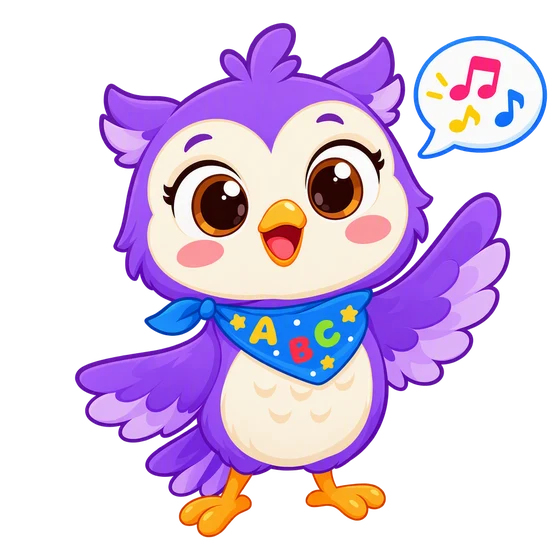
In the Lumi Kids app, Lumi the AI owl talks with your child, corrects gently and hands out stars. Ages 4–12, no ads. The first two levels and the first minute of live conversation are free.


The team behind Lumi Kids. Articles are written using published research on early-childhood language acquisition and the curriculum built into the app, and are reviewed and updated over time. Questions or corrections: hello@lumikids.live