Lumi Kids
Best German Apps for Kids, Compared by Age and Format
A good German app for a child says every noun together with its article, plays clear audio for the new sounds and asks your child to answer out loud. For ages 4–6, pick audio-led games or videos with no reading; from 7, add lessons and stories; for older kids, a course or conversation practice.
How we compared
We took every fact from the provider's own website or store listing and asked the same questions of each app. For German, some of them weigh differently than for other languages.
- Ages, as stated. We found fewer German apps for kids than Spanish or French ones, and most that state an upper age stop at 9 or younger.
- Speaking practice. German sounds such as ü in grün and the ch in ich are learned by copying. An app that only asks a child to tap pictures trains recognition, not saying. We note speech recognition, AI conversation or a live teacher, per language.
- Reading needed. German is read fairly regularly once a child knows combinations such as sch, ei and ie, but every noun starts with a capital letter and long compound words such as Handschuh (glove, literally "hand shoe") appear early. For under-7s, an app should not depend on reading.
- Articles. Every German noun is der, die or das. Learning Ball without der means learning it twice. The providers' pages rarely say how they handle this, so check in the free part.
- Format, pricing model, ads and offline use. Format and pricing model are in the table; ads and offline use are in the notes below where stated. We list no prices.
| App | Product | Ages (as stated) | Format | Speaking practice | Reading needed | Pricing model | Platforms | Sources |
|---|---|---|---|---|---|---|---|---|
| Dinolingo | Dinolingo German | 2–14 | Lessons | Speech recognition | No | Subscription | iPhone/iPad, Android, Web | [1] [2] [3] [4] [5] [6] |
| Duolingo | Duolingo German course | Not stated | Lessons | Speech recognition | Yes | Free part + paid | iPhone/iPad, Android, Web | [7] [8] [9] [10] [11] |
| Fluency Kids | Fluency Kids German | 4–12 | Reading | Not stated | Not stated | Not stated | Android | [12] [13] |
| Gus on the Go | Gus on the Go: German | 0–5 | Games | Not stated | No | One-time purchase | iPhone/iPad, Android | [14] [15] [16] [17] [18] |
| LangsForKids | German For Kids | Not stated | Lessons | Not stated | Not stated | Free part + paid | Android | [19] |
| Little Pim | Little Pim German | 0–6 | Videos | No | No | Subscription | iPhone/iPad, Android, Web | [20] [21] [22] [23] |
| Lumi Kids (our app) | 4–12 | AI voice tutor | Conversation with AI | No | Free part + paid | iPhone/iPad, Android | [24] [25] | |
| MUZZY BBC | MUZZY German | Not stated | Videos | Not stated | No | Subscription | iPhone/iPad, Web | [26] [27] [28] [29] |
| Studycat | Studycat German | 2–8 | Games | No | No | Free part + paid | iPhone/iPad, Android | [30] [31] [32] [33] [34] |
| Unuhi | Unuhi bilingual books (German) | 3–8+ | Reading | Not stated | Not stated | Free part + paid | iPhone/iPad, Android | [35] [36] [37] |
| ZingyBear for Kids apps | German for Kids: Learn Deutsch | 3–9 | Lessons | Not stated | No | Free part + paid | iPhone/iPad | [38] |
Facts as each provider states them on its own site or store listing, checked on October 27, 2026. No prices (they differ by country and change), no ratings. Lumi Kids is our app.
Sources
- https://dinolingo.com/
- https://dinolingo.com/language-courses/
- https://dinolingo.com/dinolingo-app/
- https://dinolingo.com/dinolingo-launches-new-speaking-feature/
- https://apps.apple.com/us/app/dinolingo-kids-learn-languages/id1537076111
- https://play.google.com/store/apps/details?id=com.dinolingo.dinolearning
- https://apps.apple.com/us/app/duolingo-learn-languages/id570060128
- https://play.google.com/store/apps/details?id=com.duolingo
- https://www.duolingo.com/privacy
- https://www.duolingo.com/terms
- https://blog.duolingo.com/count-on-duolingo-for-flexible-language-learning-this-school-year/
- https://play.google.com/store/apps/details?id=com.fluencylang.fluencykids
- https://getfluencyapp.com/kids/privacy
- https://apps.apple.com/us/app/gus-on-the-go-german/id555583027
- https://play.google.com/store/apps/details?id=com.toojuice.android.gus.german.germany
- https://www.gusonthego.com/
- https://www.gusonthego.com/gus-on-the-go-faq/
- https://play.google.com/store/apps/developer?id=toojuice,+LLC
- https://play.google.com/store/apps/developer?id=LangsForKids
- https://www.littlepim.com/
- https://www.littlepim.com/faq
- https://apps.apple.com/us/app/little-pim-video/id1492323426
- https://play.google.com/store/apps/details?id=com.littlepim.videoplayer
- https://apps.apple.com/us/app/lumi-kids-learn-languages/id6797690284
- https://play.google.com/store/apps/details?id=us.appfusion.speaklykids&hl=en
- https://www.muzzybbc.com/
- https://www.muzzybbc.com/pages/how-muzzy-works
- https://www.muzzybbc.com/pages/bbc-all-languages
- https://apps.apple.com/us/app/muzzy-kids-language-learning/id6469683059
- https://studycat.com/products/german/
- https://apps.apple.com/us/app/learn-german-studycat/id870623264
- https://play.google.com/store/apps/details?id=net.studycat.fungerman
- https://studycat.com/
- https://itunes.apple.com/search?term=studycat&entity=software&country=us
- https://unuhi.com/
- https://apps.apple.com/us/app/unuhi-bilingual-books/id1394567278
- https://play.google.com/store/apps/details?id=com.oxfordappdevelopment.unuhi
- https://zingybear.com/apps/
The bracketed numbers in each row link to the sources listed under the table.
Gus on the Go
Gus on the Go: German is a one-time purchase for ages 0–5 with about 90 vocabulary words, no ads and no in-app purchases. It needs no reading, which makes it an easy first look at German for a preschooler.
Little Pim
Little Pim German is a video series for ages 0–6, with 5-minute episodes covering 360+ words and phrases. Children watch and listen; there is no speaking task and no reading. The subscription covers all 12 Little Pim languages and also plays on TV devices.
Studycat
Studycat German (ages 2–8) teaches through games, entirely in German, and works offline without ads; the free version includes a limited set of topics. Studycat states that its speech recognition is live in English and Spanish and "on the way" for German, so for now this app is about listening and tapping.
ZingyBear for Kids apps
"German for Kids: Learn Deutsch" (ages 3–9) is ZingyBear's German app for iPhone and iPad. It pairs native German audio with English, adds math, science and culture topics, needs no reading, has no ads and works offline.
Unuhi
Unuhi's bilingual picture books and flashcards work in any pair of about 20 languages; German is one of six with native audio narration, so your child can hear a German sentence while seeing it next to the English. Ages 3–8+, free part plus paid content, works offline.
Fluency Kids
Fluency Kids German offers narrated, illustrated short stories and nursery rhymes with each word highlighted as it is read. Its privacy policy says about ages 4–12, no accounts and no ads. It is on Google Play only, and the pricing model is not stated.
MUZZY BBC
MUZZY German follows the BBC's animated Muzzy films with vocabulary videos, songs, online games and printables, and an online recording studio where children can hear themselves (no automatic feedback stated). The site says it is "designed for children of all ages" and needs an internet connection; it is a subscription on iPhone, iPad and the web.
Lumi Kids (our app)
Lumi Kids is our app, so take that into account. Children aged 4–12 hear standard German, play with the words and then speak with Lumi, an AI owl, who explains in English; the word cards show each noun with der, die or das, the youngest need no reading, and reading and spelling (capital letters on nouns included) start at age 7. Children aged 10–12 get their own talk topics. The first two levels and 60 seconds of live talk are free; Lumi Plus is an auto-renewing monthly or yearly subscription that unlocks the third and fourth levels and adds 10 minutes of live talk a week. No ads; iPhone, iPad and Android.
Dinolingo
Dinolingo German is part of a subscription that covers 50 languages for up to six children, with videos, games, songs, books and worksheets that avoid translation, and a speech-recognition speaking feature since June 2026. Its stated ages run from 2 to 12 (App Store) or 14 (website and Google Play), so it can follow a child past age 9.
LangsForKids
German For Kids by LangsForKids is an Android-only picture-vocabulary app covering topics such as the alphabet, numbers, colors, animals and family, with a free part, paid content and ads.
Duolingo
Duolingo teaches German in a general app for all ages rather than a kids' app, and it expects the learner to read. Under-13s get "Child User" accounts that use a username instead of an email and have restricted social features. It listens with speech recognition, and its free tier shows ads (non-personalized for under-16s) until you upgrade to Super Duolingo.
Which app at which age
Ages 4–6: articles by ear. Young children pick up der, die and das the way German children do, as part of the word. Choose apps that need no reading, keep sessions to a few minutes, and say the article with the noun yourself during the day: der Löffel at breakfast, die Jacke at the door. Picture-and-sound apps (Gus on the Go, Little Pim, Studycat, ZingyBear) suit this age.
Ages 7–9: speaking and first reading. German spelling becomes a help once a child knows a handful of letter combinations. Add stories with narration (Unuhi, Fluency Kids) or a structured course (Dinolingo, MUZZY BBC), and keep one activity per session where your child speaks. Color-coding nouns helps here: blue for der, red for die, green for das.
Ages 10–12: grammar can make sense. Older children can follow simple rules, such as that words ending in -chen are das. Few German apps for kids state ages this high (Dinolingo, Fluency Kids, Lumi Kids); a confident reader can also use Duolingo with a parent nearby. A class or a German-speaking pen pal adds what an app lacks.
German in the US and the UK
German is taught in 4% of US public schools, rising to 12% of high schools, and it is the partner language in 3% of public schools with dual-language programs (NCES School Pulse Panel, January 2024, in the ACTFL report on NCES data, March 2026; checked October 27, 2026). In a March 2026 survey, 10% of US adults said it is extremely or very important for schools to offer German (Pew Research Center; checked October 27, 2026). In England, the 2025 Language Trends report found access to German "close to disappearing" in less affluent schools (ALL summary, July 2025; checked October 27, 2026).
So for most families German starts at home, often because of family roots, a parent's work or a move to Germany, Austria or Switzerland. An app gives a young child a clear German voice to copy every day. It cannot give them a conversation with a grandparent, a teacher who explains why it is das Mädchen, or the bedtime stories in German that build a real feel for the language. Our article on the best age to learn a second language covers when to start, and raising a bilingual child helps families who speak German at home.
Free, freemium or subscription?
The German table shows three pricing models. One-time purchase: Gus on the Go, paid once, nothing renews. Free part + paid: Duolingo, LangsForKids, Studycat, Unuhi, ZingyBear and Lumi Kids let your child use part of the app first; the rest is unlocked by a purchase or a subscription. Subscription: Dinolingo, Little Pim and MUZZY BBC give access for as long as you pay. Fluency Kids gives no pricing model.
A good test is a week of five-minute sessions with the free part. Watch three things: whether your child says German words afterwards, whether nouns come with their articles, and where the paywall starts. If you begin a trial, set a phone reminder before the last day. Subscriptions bought through the app stores renew automatically: on an iPhone or iPad, manage them in Settings under your name and Subscriptions; on Android, open the Google Play Store, tap your profile picture and choose Payments & subscriptions. Uninstalling an app does not stop its subscription.
The 64 first German words, each with its article and Lumi's audio, are on our German for kids page; every other language is on the languages for kids hub.
Frequently asked questions
Do German apps for kids teach der, die and das?
Some do and some only show the noun; the providers' pages we checked rarely say. Open the free part and look at the first animal or toy words: you want der Hund, die Katze, das Pferd, said and shown together. Lumi Kids shows every noun with its article.
Which German apps for kids have speaking practice?
Dinolingo (speech recognition since June 2026), Duolingo (speech recognition) and Lumi Kids (a spoken conversation with an AI owl) ask children to speak German. Studycat says its speech recognition is "on the way" for German; MUZZY BBC lets children record and hear themselves, without automatic feedback.
Is German hard for English-speaking children?
Many first words are easy because the two languages are related: Hand, Haus, Fisch, Ball. The new parts are a few sounds (ü, ö, the two kinds of ch) and the three articles. Young children learn articles by ear when they always hear them with the noun.
Is there a German app for a toddler?
Little Pim (ages 0–6), Gus on the Go (0–5) and Studycat (2–8) state ages for toddlers and preschoolers, and Dinolingo starts at 2. At this age a few minutes of listening with you next to them is plenty.
Do German apps for kids work offline?
Studycat, Unuhi and ZingyBear state that they work offline. MUZZY BBC says it needs an internet connection, and the other providers don't say. Test any app in airplane mode before a trip.
Do the apps teach German from Germany, Austria or Switzerland?
Lumi Kids teaches standard German from Germany. Most other providers don't name a variety on the pages we checked. Standard German is understood everywhere German is spoken; Austrian and Swiss accents and some everyday words differ.
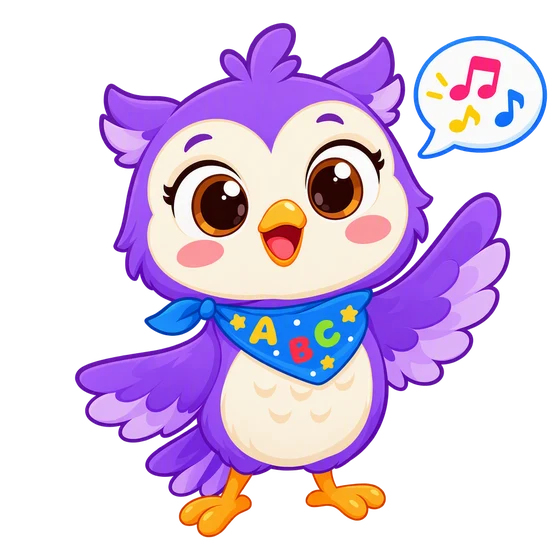
In the Lumi Kids app, Lumi the AI owl talks with your child, corrects gently and hands out stars. Ages 4–12, no ads. The first two levels and the first minute of live conversation are free.


The team behind Lumi Kids. Articles are written using published research on early-childhood language acquisition and the curriculum built into the app, and are reviewed and updated over time. Questions or corrections: hello@lumikids.live